When it comes to diets and weight loss, there are tons of online resources out there to help you figure out which diet is best for you. But when it comes to diets for clear skin, there’s a lot less information.
Some people say that going plant-based is the key to stopping acne. Others claim carbs are the culprit. Some might tell you to cut out dairy or avoid chocolate. Who are you supposed to trust?
In this article, we take a scientific look at 4 of the most common modern diets for improving your overall health: Paleo, Keto, Vegan, and Whole30. For each of these diets, we’ll examine:
What you can and can’t eat
How it affects the underlying root causes of acne
Modifications you should make to the diet if you want clear skin
Before we begin, let me start by saying this – there is no one-size-fits-all when it comes to diets. All of us have different genetics, preferences, and even financial situations. What works for one person might not work for someone else, and that’s totally normal.
The goal of this article is to give you baseline knowledge for choosing the right overall framework for a diet that naturally lends itself to clear skin. From there, you’ll likely have to modify, tweak, and experiment.
Paleo is all about returning to the diet our “paleolithic” ancestors ate some 2.5 million years ago. During this time humans were hunter-gatherers that ate mainly meat, fish, nuts, greens, and seeds. Paleo-enthusiasts argue that this is how we were meant to eat – for 95% of our species existence may have been eating a Paleo-like diet.
What does this mean for the modern man and woman? Most of the foods we eat today are not foods we were evolved to eat. Believe it or not, our ancestors weren’t getting their fuel from pizza pockets and french fries.
The Paleo Diet offers us a simplified roadmap back to this “primal” style of eating.
What can I eat on Paleo?
Paleo is all about plenty of natural, whole, and preferably organic food, including:
Meat (and lots of it) – Beef, lamb, pork, poultry, turkey, etc.
Fish & Seafood – Salmon, sardines, trout, shrimp, shellfish, oysters
* Often not considered part of a strict Paleo diet
What can’t I eat on Paleo?
If a food doesn’t fall into one of the categories above, it’s probably a no-go.
A good rule of thumb is that if you can’t find it on the outer isles of a grocery store or it has more than 5 ingredients listed, it’s probably not Paleo:
Grains – wheat, barley rye, corn, non-white rice (this includes any baked goods, like bread, crackers, muffins, cookies.)
Any processed foods or foods with artificial flavors, sweeteners, or additives
Any breaded/fried items
Fruit juice
Any products containing or cooked in vegetable oils – soybean oil, canola oil, sunflower oil, hydrogenated oils, salad dressings
Pasteurized dairy
Does The Paleo Diet work for acne?
The short answer: yes – Paleo is generally a great diet to follow for acne.
It turns out that acne is a relatively new and westernized disease. Cultures that have a Paleo-like diet experience much lower rates of acne than cultures with westernized diets like the US or UK.
In these westernized societies (US, UK, Australia, etc.) acne effects upwards of 95% of the adolescent population and up to 54% of the adult population (R).
But what about non-western societies? What about cultures whose diets are more like our ancestral forefathers and less like the USDA’s food pyramid (don’t even get me started on the food pyramid)?
Acne is minimal, and sometimes even nonexistent.
Dr. Loren Cordain did a study on two populations of people who eat a diet very similar to Paleo: the Kitavan Islanders of Papua New Guinea and the Aché hunter-gatherers of Paraguay. The study looked at both adolescent and adult rates of acne.
The results speak for themselves:
1,200 Kitavan’s were studied – None had acne
115 Aché’s were studied – None had acne, and none developed acne over an 843 day period
That’s not to say there aren’t other lifestyle factors at work – these cultures are highly active, constantly outdoors, and relatively stress-free – however, it does lay out a rather compelling case for diet, and more specifically, a Paleo-like diet, being effective at treating acne.
PS: Acne has been around for thousands of years. The Egyptians and Greeks have written about acne. I’m not proposing that acne hasn’t existed in the past – but I am proposing that we see much higher rates of acne in the west for a reason – largely our diet and nutrition.
Why is Paleo so effective at treating acne?
The Paleo diet steers clear of all of the major root causes of acne. Your dermatologist might have told you that acne has nothing to do with diet, but that’s simply not the case. We’re getting more and more evidence every year that diet directly affects acne:
By eliminating many high GI carbs (pasta, bread, candy) you avoid most of the foods that cause insulin spikes
Without the consumption of grains, your intake of lectins (antinutrients that punch holes in your gut) greatly decreases
By cutting out vegetable oils, you eliminate a massive source of omega-6 fatty acids that cause chronic inflammation
Decreasing or eliminating non-raw dairy drastically decreases IGF-1, a hormone that can lead to acne
The Paleo Diet, in theory, avoids all the root causes of acne, but that all depends on how you implement it.
The Verdict
Acne is largely a modern, westernized disease, so it makes sense that Paleo might just be the solution.
But, this all depends on how you “go” Paleo – if you eat tons of fruit and 3 sweet potatoes every day, you’re still probably going to get acne.
Paleo is also only one part of the solution – you need to manage other lifestyle factors too, like sleep, stress, and exercise if you want to see success.
But at the end of the day, it’s a pretty great starting place.
It’s fairly easy to follow, there’s plenty of great resources out there, and there’s a legitimate reason it works for acne – you get rid of nearly all of the foods that cause acne in the first place.
It turns out, if you want to look like a model, you might want to eat like a caveman.
Ketogenic diet (low-carb) for acne
The ketogenic diet, or “keto” for short, has been around since 1924 but only recently caught fire. Podcasts like Tim Ferriss Show and documentaries like The Magic Pill have given the ketogenic diet a huge publicity boost. Users of the ketogenic diet often report higher levels of energy, fewer food cravings, and massive fat-loss results.
The basis of the ketogenic diet is getting into a state of ketosis – or your body’s natural “fat-burning” mode.
For the majority of people eating plenty of grains and sugar, the body runs on the glucose from carbs. You eat carbs, your blood sugar rises and your body releases insulin. Later, you deplete your energy stores throughout the day.
Ketosis flips this around – instead of burning carbs for energy, your body burns fat by converting fatty acids into “ketones”. Believe it or not, this process is actually a lot more efficient than burning carbs for energy. Think about it – do you think our ancestors were running around all hopped up on Hot Pockets and Jolly Ranchers? Nope, they were likely in a state of ketosis most of the time.
To achieve ketosis you have to consume a diet that’s high in fat (~60-70% of calories), moderate in protein (~20-25% of calories), and low in carbs (~5-10% of calories, or <20g net carbs/day).
By not giving your body many carbs to work with, you force your body to burn fat for energy instead of carbohydrates. While not eating carbs may sound like torture, many keto-enthusiasts argue that this is actually how our body was meant to operate and report profound mental and physical benefits from a ketogenic diet.
Unlike the Paleo Diet, keto isn’t going to tell you what to eat. Instead, it focuses on how much carbs, fat, and protein you need to consume to stay in “ketosis”, or fat-burning mode.
As long as you’re consuming less than 20g of net carbs* per day, you can hypothetically eat whatever you want. You couldhave eggs and bacon for every meal or even do a vegetarian keto. This also means it’s possible to go keto and Paleo at the same time.
With that being said, common foods to eat include:
Meat (and lots of it) – Beef, lamb, pork, poultry, turkey, etc.
Fish & Seafood – Salmon, sardines, trout, shrimp, shellfish, oysters
Small amounts of low-sugar fruit – Blackberries, blueberries, strawberries
* Net carbs = total carbs – dietary fiber
What can’t I eat on Keto?
One potential problem with sticking to keto is that it’s not hard to get to 20g of net carbs. Some Paleo-friendly foods like sweet potatoes or even fruit can put you over the edge instantly.
One sweet potato has 21g of net carbs. A single cup of white rice has 34g. Even a banana has 24g. Remember – we’re going for less than 20g of net carbs throughout the entire day.
Here’s a common list of foods to avoid on keto:
Grains – Wheat, barley rye, corn, rice, quinoa
Legumes – Beans, soy
Most fruits – Apples, bananas, oranges, fruit juice
In short, yes – the ketogenic diet can be a godsend for acne, but the problem with an unstructured ketogenic diet is that it doesn’t explicitly specify what you can and can’t eat.
Novice keto-ers might jump in thinking they can eat bacon and cheese all day without developing acne. Sure, you might lose weight, but that’s disastrous for your overall health and your skin.
On the surface a ketogenic diet is great for acne because it tackles several of the root causes at the source:
With that being said, if you’re loading up on tons of dairy or eating fistfuls of nuts every day, you might be doing your skin more harm than good.
That’s why I highly recommend doing Paleo and keto simultaneously if you’re going to jump into the world of ketosis.
If you do go keto and struggle with acne, don’t panic- a few simple tweaks are probably all you need:
Go dairy-free – Dairy increases levels of IGF-1, can trigger insulin, and increase inflammation – all problematic for acne (read more about dairy here)
Watch your omega-6 intake – Most nuts are loaded with inflammation-causing omega-6 fatty acids. So are many non-organic types of meat and farmed fish. Too many omega-6’s without healthy omega 3’s to balance them leads to chronic inflammation – a root cause of acne.
Eat plenty of vegetables – Sure, you might be able to eat only eggs and bacon while losing weight, but you’re certainly not getting enough nutrients and antioxidants to fight acne. Make sure you eat plenty of leafy greens, like kale, spinach, romaine, and broccoli.
Going keto and adhering to these simple rules make it a pretty bulletproof option for fighting acne. You’ll eliminate most, if not all of the root causes of acne if you do it correctly. If you’re still struggling with some lingering pimples after going keto, you can consider adding intermittent fasting to the mix as well.
The Verdict
A slightly modified keto diet that’s free of dairy, balanced in omega fatty acids, and filled with lots of vegetables is pretty bulletproof. If you can stick to it, you almost entirely eliminate the chance for insulin resistance or inflammation to give you any trouble.
The problem is that keto is very restrictive, and requires you to be extremely diligent about what you eat. “Cheat meals” are not really a thing on keto, and going halfway won’t cut it. That’s why a lot of people simply shouldn’t do keto – it can cause a lot of stress and carry with it a lot of work.
The good news is that most people with acne don’t need to follow a ketogenic diet, even in extremely severe cases. A low/moderate-carb Paleo approach might be the way to go. If you’ve tried a moderate-carb Paleo approach and it didn’t work, then a full-on ketogenic diet may be the fix, especially if you continue to eat Paleo.
The Vegan diet for acne
The Vegan Society states that Veganism is, “a way of living that seeks to exclude, as far as possible and practicable, all forms of exploitation of, and cruelty to, animals for food, clothing and any other purpose.” (R). In other words, you’ll be avoiding all meat, animal by-products, or food with animal-based ingredients.
Veganism has caught fire in recent years by animal rights advocates, health gurus, and nutritionists – however, contrary to popular belief, going Vegan can be a nightmare for your acne if you don’t take the right precautions. More on that in a bit.
What can I eat on a Vegan Diet?
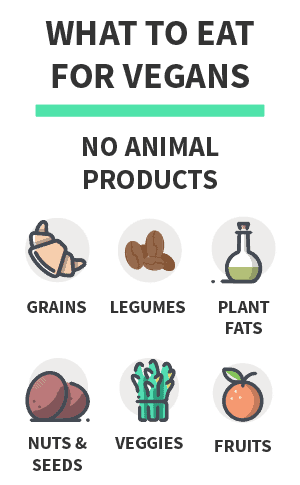
According to The Vegan Society, the following foods should be the staple of a Vegan diet:
Fruits
Vegetables
Starches – Oats, sweet potato, bread, pasta, rice
Beans, lentils, chickpeas, tofu
Nuts and seeds
As long as there’s no animal byproducts or ingredients in the food, you’re technically good-to-go.
What can’t I eat on a Vegan Diet?
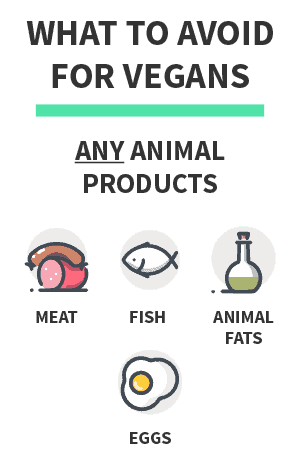
The cornerstone of Veganism is avoiding anything animal-related. That means staying away from not only meat, eggs, and seafood, but also any products that exploit or harm animals in the process of making them. This includes:
Meat – All meat, including beef, lamb, pork, poultry, seafood, turkey, etc.
Eggs
Dairy – All dairy, including milk, cheese, yogurt, goat milk, etc.
Honey
Any animal-additives or ingredients found in food:
Salad dressings
Food fried in animal fat
Non-dairy creamer
Potato chips and fried foods
Pasta containing egg
Does going Vegan work for acne?
A lot of people experience better skin when they go Vegan, and you might be one of them.
But, from a birds-eye view, the Vegan diet can be extremely problematic for acne.
Just like all the other diets, meals and nutritional intake on it can vary a ton from person to person. On keto, for instance, you could eat a pound of bacon and a dozen eggs a day with no greens, or you could eat only leafy greens and grass-fed meat. One’s going to have a lot better effect on acne than the other. The same is true for Veganism.
Just looking at The Vegan Plate, you run into quite a few issues that may cause acne:
Tons of lectins – Pasta, bread, rice, and oats are all filled with anti-nutrients called lectins that can severely damage your gut. This can lead to leaky gut syndrome, and later chronic inflammation. Needless to say, this is not good for acne
Plenty of high glycemic carbs – Again, pasta, bread, rice, and oats are all high GI foods. Many fruits are also high in GI and fructose. These foods spike blood sugar and trigger insulin, a hormone that can cause acne.
Not enough usable vitamin A – Nutritional labels are lying to you. The vitamin A value you see listed for kale or carrots isn’t what your body gets out of it. Vegetables are a pre-vitamin A that your body needs to convert to retinol to use. During this process, you’re lucky if you retain a fraction of the listed amount. Where can you find retinoids? Cod liver oil, cheese, eggs, and butter are all great, non-Vegan sources (check out my supplements guide here for more info)
Not enough usable omega-3’s – You can still get omega-3’s as a vegan through foods like flaxseed – however, you’re not getting the right type of omega-3. Your body needs DHA and EPA to truly counter your intake of inflammation-causing omega-6 fatty acids. Unfortunately, the type of omega-3 found in plants is ALA – a subgroup of omega-3’s that’s highly inefficient for the body to break down. Where do you get DHA and EPA? Fish and fish oils, mainly. Both off-limits for Vegans.
These are all pretty significant drawbacks. You could certainly try cutting out the lectin-containing foods and consuming as little omega-6’s as possible (watch out for nuts), but that doesn’t leave you with a whole lot to eat.
That isn’t to say there aren’t some clear positive aspects of Veganism when it comes to diet and acne:
No dairy – Avoiding dairy limits IGF-1, an acne-causing hormone
Rich in antioxidants – Lots of fruits and vegetables means your body will have plenty of antioxidants to fight off the free radicals and sebum oil oxidation that causes acne
Avoid issues associated with low-quality meats – By avoiding meat altogether, you avoid hormonal, antibiotic, and fatty acid issues often associated with factory/lower-quality meat
The Verdict
The Vegan diet varies so much from person to person that it’s hard to put a blanket statement on its effectiveness for treating acne.
If you opt to eat a legume and grain-heavy vegan diet, you’re likely going to run into issues with acne. By no means is the “default” Vegan diet a skin-friendly diet. In fact, out of all the diets listed here, it’s arguably the least skin-friendly.
But what if you cut out dairy and substantially limit legume and grain consumption to safe starches? Well, you’re probably in luck – although you still might not get enough essential nutrients found in animals that you need to fight off acne. Seafood, in particular, is such an important and viable asset when striving for clear skin, and by totally avoiding all meats you forgo a lot of necessary nutrients.
Whole30 Diet for acne
I’m going to make this quick, as the Whole30 program is extremely similar to The Paleo Diet, and thus has all (if not more) of the benefits.
Whole30 is largely marketed as a weight loss diet, with the intention of changing dietary habits over a 30 day period (you’re actually supposed to avoid looking at a scale during the 30 days). However, there’s no reason you can’t use Whole30 for other reasons, like autoimmune disorders, disease prevention, or acne.
The Whole30 Diet revolves around eating real food for 30 days. It’s loosely based off the Paleo diet and features many of the same nutritional values.
What to eat on Whole30
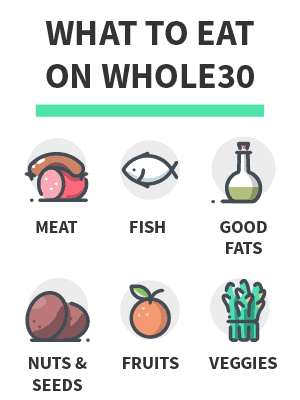
Whole30 is more about what not to eat, but if you follow the protocol correctly it’ll probably look something like this:
Meat (and lots of it) – Beef, lamb, pork, poultry, turkey, etc.
Fish & Seafood – Salmon, sardines, trout, shrimp, shellfish, oysters
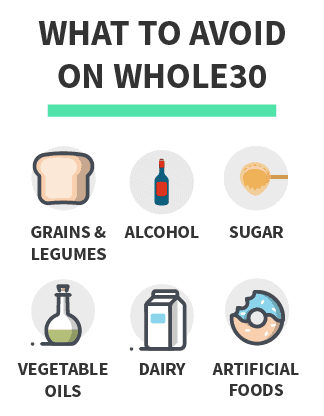
Any processed foods or foods with artificial flavors, sweeteners, or additives
Any breaded/fried items
Fruit juice
Any products containing or cooked in vegetable oils – soybean oil, canola oil, sunflower oil, hydrogenated oils, salad dressings
Any dairy (except ghee)
Any sugars, real or artificial
Any alcohol, even if used for cooking
No “Paleo-friendly” recreations of exempt foods (eg: almond flour, macadamia bread, keto cookies)
Those last 4 additions make it a bit more strict than Paleo.
The Verdict
Just like Paleo, if you follow Whole30 you’ll avoid pretty much all of the root causes of acne.
Technically Whole30 is a bit more restrictive than Paleo, so this makes sense, right?
If you want more info on why Whole30 works, go read my section on the Paleo diet above, all of the main points will still apply.
Putting it all together – What’s the best diet for acne?
I said it at the beginning of the article, and I’ll say it again – there really is no best diet for acne.
Individuals vary so much that it’s impossible to pinpoint the “perfect” diet. I’m sure we all know someone who can eat pizza and french fries every day and still have perfectly clear skin while others suffer massive breakouts after eating a small amount of dairy.
Genetics, environmental factors, existing dietary habits, discipline, and even your financial situation are all factors in choosing a diet.
Is it really worth going keto if you already know you won’t be able to give up your weekly pizza? Should you really go Vegan if you know you have extremely low energy when you don’t eat meat? Should you commit to buying only organic food even though you can’t afford it right now?
See what I mean? Choosing a dietary strategy is a really personal decision – it’s a decision that I can’t make for you.
With that being said, there are some really good starting places out there.
1. A Good First step – Try going Paleo
In an ideal world, the Paleo diet works for most people. Whether you have minor acne or serious cystic acne, the Paleo diet should give you significant results. At the very least, it’ll give you something to work off of while you continue to tweak and refine your diet.
The GoodGlow.co Diet Blueprint is largely based off of the Paleo diet, and really contains all the info you need on one page.
Give Paleo a try for 30 days – that’s about the length of time it takes the skin to produce new cells, have them rise to the surface, and shed old cells. Even if you adhere to the diet perfectly, you probably won’t be totally clear yet – that’s completely natural – what you’re looking for is solid progress.
If you go Paleo and still find yourself breaking out…
2. Consider cutting carbs & adding omega-3’s
These are the two most likely problems people run into on Paleo.
First off, carbs (white rice, sweet potatoes, lots of fruit) triggers the release of insulin, which in turn causes acne. If you’re consuming more than 150g of carbs per day (track your carb intake for a day or two using Cronometer) try to squeeze that down to 100g or so. If you still experience issues, try going even lower to see if it helps.
Secondly, if you’re not eating oily fish, like wild-caught salmon, mackerel, sardines, or cod, you’re probably not getting enough omega-3 fatty acids to fight inflammation. Simply incorporating seafood into your diet once a week is usually enough. I wrote an in-depth article about omega-3’s and sardines here.
3. Implement intermittent fasting
If you’re still not seeing the results you’d like (and you’ve given it at least 1-2 months), then I would consider incorporating intermittent fasting.
Intermittent fasting is simple, natural, and extremely effective for reducing acne. Essentially, you’re taking a small break from eating every day or every week to fast. This can be as simple as skipping breakfast or as extreme as fasting for 20+ hours a day.
I have a full article on the ketogenic diet and acne coming out soon. For many people, the ketogenic diet can be the final hurdle in their fight for clear skin.
I originally went Paleo and soon found a ketogenic and Paleo diet was the combination I needed for clear skin. It really just depends on your biology and genetics.
Because keto is so hard to stick to, I recommend it as a last resort or for severe cases of acne.
5. Consider the carnivore diet for ance
The carnivore diet is still in its infancy, but if none of the diets I’ve mentioned above have worked for your acne, the carnivore diet might just do the trick.
It consists of eating only animal products, so meat, seafood, dairy, and eggs, and can have pretty profound effects on the body.
Closing Thoughts
For a lot of people just going Paleo will be enough. For others, meat might actually be problematic, and a plant-based diet is ideal. For some, it’s going to take plenty of vegetables, a Paleo diet, intermittent fasting, and ketosis to really jump-start the healing process.
It really just depends.
The key is to have faith in yourself, make a plan, and stick to it for 30 days. Be mindful of what you eat, how it makes your skin react, and how it makes you feel. Listen to your body and tweak your diet accordingly. These diets are all great starting places, but odds are you have some weird reactions to certain foods you didn’t even know about (I have a really hard time handling onion). Keep experimenting and soon you’ll have your own personaldiet that works for you and your skin.
Most importantly: You can’t improve if you don’t start.
Originally Published: June 10, 2018
Need more help? Ask our team!
I’ve helped over 2,500 people clear their acne naturally. If you cannot easily find an answer to your question on the website, please reach out to me by email ([email protected]) or send me a message on Instagram or Twitter. I will reply within 24 hours.
Get The Definitive Guide To Permanently Clear Skin
Everything you need to beat acne at the source. 250-Page eBook, Clear Skin Food + Drink Database, and Members-Only Content
Hi, I’m Sam Wood, the chief editor, lead acne expert, and health coach at GoodGlow, as well as a best-selling author for one of the top acne books on Amazon. I struggled with acne for over 10 years, and began studying the effects of diet on skin quality while pursuing a degree in Nutrition Sciences at the University of Missouri. After shifting from mainstream skincare trends to in-depth research in medical journals, I experienced significant personal success in managing my acne. This inspired me to start GoodGlow, where I simplify complex scientific findings into easy-to-understand advice. With over 10 years in the field, I’ve helped more than 2,500 people achieve clearer skin through natural, holistic methods, and I’m dedicated to personally assisting those seeking guidance on their acne journey.